
The sustainability conversation is changing.
Not in terms of ambition. In terms of what’s actually driving action.
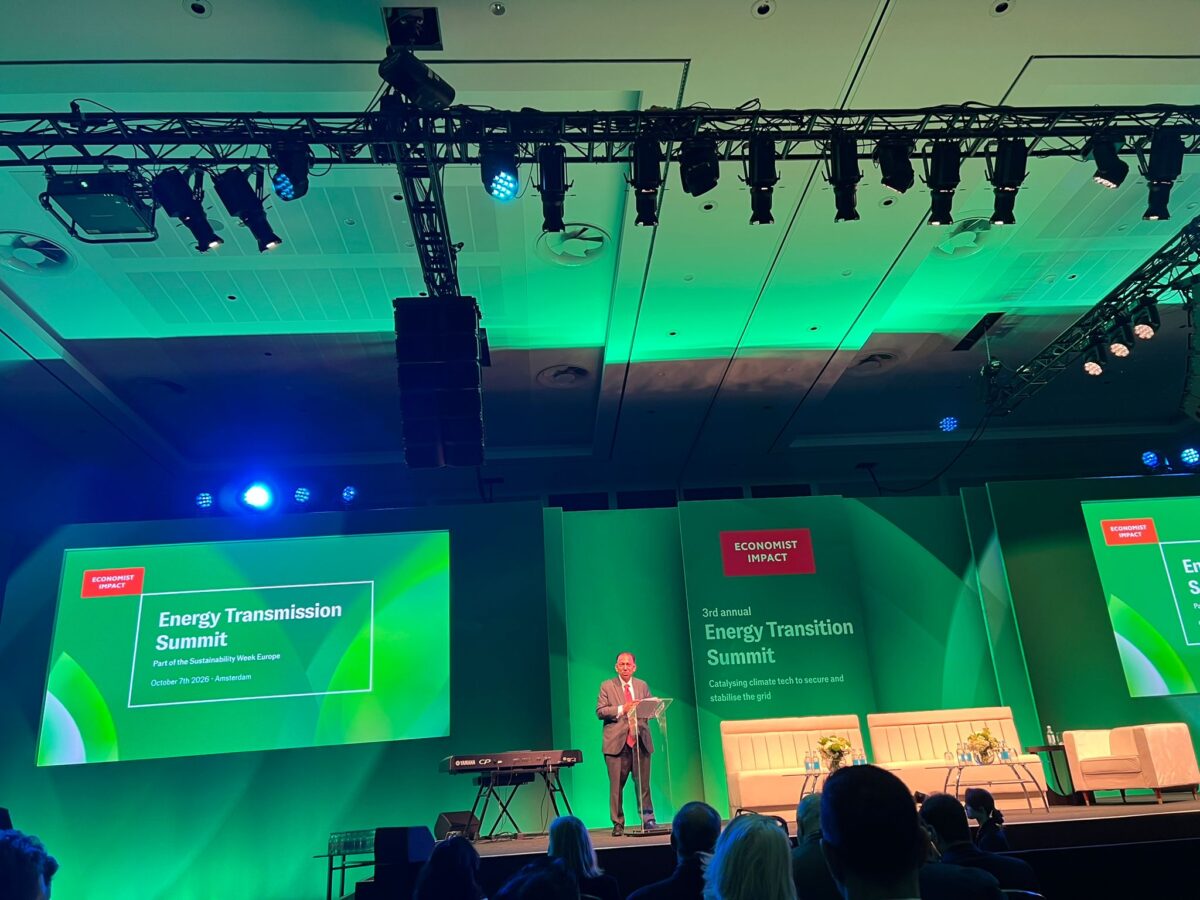
Last week we spent three days at The Economist Sustainability Week in London, now in its 11th edition and bigger than ever. Over 2,500 attendees, 400+ speakers and 80 case studies Cities Today gathered at the Intercontinental London to tackle one central question: can profit and the planet genuinely reinforce each other?
The short answer from the room was yes. But the longer answer, the one worth sitting with is more nuanced. And it’s one that Cambio believes the mainstream sustainability conversation is still missing.
The Shift Nobody Is Talking About Loudly Enough
The framing of this year’s event was clear: profits can speed up progress to net zero, and despite some governments backtracking on green targets, many companies continue to charge forward. Nature4Climate
That’s an important signal. The sustainability conversation has matured beyond idealism. Businesses are no longer asking should we act. They’re asking how fast can we move and what does it cost us if we don’t.
But here’s what kept surfacing in the conversations I was having on the margins of the panels.
Sustainability is no longer framed as a moral imperative. It’s being reframed as a risk management strategy.
Operational risk. Reputational risk. Talent risk. Regulatory risk.
The organisations accelerating their sustainability response aren’t doing it purely because it’s the right thing to do. They’re doing it because the cost of inaction is becoming quantifiable, and boards are starting to notice.
That’s a good thing. But it also means something important is at risk of getting lost.
What the Room Got Right
Across three days of panels and discussions, it became clear that sustainability conversations are moving beyond setting headline climate targets. The real focus is now on infrastructure, supply chains, competitiveness, and how these targets are actually being delivered. Componentsense
Several themes stood out as genuinely important.
The energy transition is real but fragile.
Electrification dominated Day 1, which centred on the Energy Transition Summit. The UK’s dependence on gas remains high. Demand for electricity is rising. And as one panel made clear, the grid simply isn’t ready for the pace of change being asked of it.
Geopolitics adds another layer of complexity. Developments in the Middle East are already influencing energy markets. Oil and gas price fluctuations will shape how governments and businesses respond, not in theory, but in practice, right now. You cannot design a sustainability strategy in isolation from the world it sits inside.
AI is arriving in the sustainability space with trade-offs.
The key message was that AI’s sustainability impact will depend on how it is applied and governed. Componentsense Sessions explored the hidden energy cost of AI workloads, data centre siting, and the paradox of using an energy-intensive technology to solve an energy crisis. The question isn’t whether AI will play a role in sustainability. It will. The question is whether we’re being honest about what it costs to run it.
Supply chains are where sustainability strategy meets reality.
Historically, sustainability initiatives focused mainly on internal operations. Today, attention is shifting toward Scope 3 emissions, which occur across supply chains. Procurement teams now face the challenge of balancing sustainability expectations with supplier capability, particularly for smaller and medium-sized enterprises that may lack the resources to meet new requirements. Componentsense
The message from the room was clear: sustainability cannot simply be imposed on suppliers. Larger organisations must invest in building capability across their supply chains, not just measuring it.
Biodiversity is finally getting a seat at the boardroom table.
One of the new additions to this year’s programme was a dedicated Biodiversity Summit, a signal that nature risk is moving from the periphery to the centre of corporate strategy. The concept of natural capital accounting, valuing ecosystems not just as environmental assets but as business-critical infrastructure, is gaining serious traction.
What the Room Didn’t Talk About Enough
Here is where Cambio’s perspective diverges from the mainstream conversation.
Three days of panels. Hundreds of conversations. And the “S” in ESG was largely absent.
The event did an excellent job of addressing the environmental and financial dimensions of sustainability. The technology. The carbon markets. The supply chain mechanics. These are important. They matter.
But the human systems behind sustainability, the people, the culture, the leadership, received far less airtime than they deserved.
And this is not a soft observation. It’s backed by data.
Engaged teams are 23% more profitable. Inclusive leadership drives 19% more innovation revenue. Over three quarters of consumers say they will stop buying from companies that neglect employee and community wellbeing.
Social impact is not a side conversation to the sustainability agenda. It is the engine underneath it.
You cannot electrify a supply chain with a disengaged workforce. You cannot build a net zero strategy in a culture that doesn’t trust its leadership. You cannot deliver long-term environmental progress without getting the human systems right first.
At Cambio, this is the work we focus on. Helping organisations strengthen the people and culture infrastructure that makes every other sustainability goal achievable.
Resilience Is the Word of 2026
If there was one word that cut across every session, every panel and every corridor conversation at Sustainability Week 2026, it was resilience.
Not resilience as a buzzword. Resilience as a genuine strategic imperative.
The organisations leading the next decade of business will not be the ones that set the most ambitious targets. They will be the ones that build the internal systems, human, operational and cultural, to actually deliver on them.
That means investing in people as seriously as they invest in technology. It means treating inclusion and employee wellbeing as strategic inputs, not HR deliverables. And it means recognising that the “S” in ESG isn’t a footnote to the environmental agenda, it’s the foundation it stands on.
The Bottom Line
The Economist Sustainability Week 2026 reinforced something we at Cambio have long believed.
Profit and the planet can coexist. But the missing ingredient in most sustainability strategies isn’t better technology or smarter carbon accounting.
It’s people.
The businesses that understand that and build accordingly will be the ones still standing when the decade ends.
To stay informed with the latest insights for social enterprises, social innovation, subscribe to our newsletter for monthly updates straight to your inbox.